Discover the real employee turnover cost in 2026, including hidden costs, ROI of retention programs, and strategies to keep your best talent.
Key Takeaways:
- The true cost of employee turnover goes far beyond recruitment fees, including lost productivity, team disruption, and hidden cultural impacts.
- Retention programs are highly cost-effective; in 2026, structured initiatives can deliver an ROI of 3–8x while preserving engagement and trust.
- Investing in retention over recruitment prevents turnover, strengthens culture, and protects long-term business value.
Employee turnover cost is one of those business problems everyone knows is expensive; yet few organisations truly understand how expensive it is. In 2026, with hybrid work, global teams, and rising salary expectations, the real cost of losing an employee goes far beyond recruitment fees. It’s good to know though that once you understand the full picture, you can actually do something about it.
Let’s break it down – calmly, clearly, and with just enough humour to keep the spreadsheet-induced panic at bay.
What is Employee Turnover Cost?
Employee turnover cost is the total financial and operational impact a business incurs when an employee leaves and must be replaced. It includes direct expenses, like recruitment and training, as well as indirect costs such as lost productivity, team disruption, and reduced morale.
What Is the Formula for Calculating the Total Cost of Losing a Salaried Employee?
At its simplest, the formula looks like this:
Total Turnover Cost = Separation Costs + Replacement Costs + Ramp-Up Costs
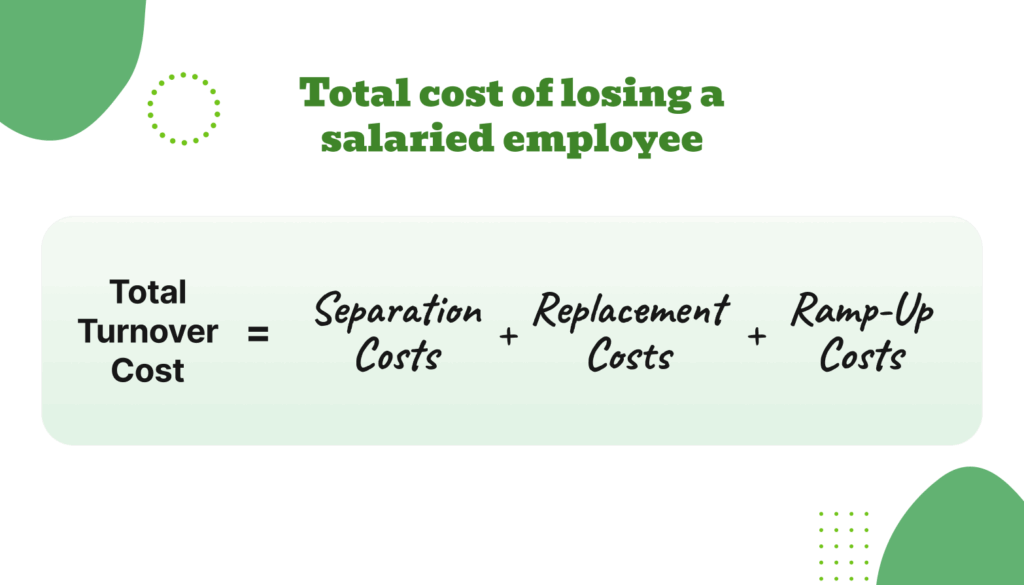
Separation costs include HR administration, exit interviews, final payroll processing, and management time spent offboarding. Replacement costs follow quickly, encompassing job advertising, recruiter fees, interview hours from multiple stakeholders, and onboarding logistics. Finally, ramp-up costs reflect the months it takes for a new hire to reach full productivity; a period during which output is lower, mistakes are more likely, and managers invest additional time in training and oversight.
When viewed holistically, replacing an employee typically costs between six to nine months of their salary (about 50–200% of annual pay), and when taking in the cost for senior or specialised roles, that figure can climb even higher.
What Are the Hidden “Soft Costs” of Employee Turnover That Leaders Often Miss?
The most expensive costs of losing an employee rarely appear in a financial report. In fact, understanding the hidden costs of employee turnover (2026 and onwards) is essential for leaders who want to see the full impact. When someone leaves, momentum leaves with them; projects slow, deadlines shift, and remaining team members often absorb extra responsibilities with or without recognition. Over time, this creates quiet frustration and emotional fatigue.
There’s also the cultural impact. High turnover subtly signals instability, even if leadership doesn’t intend it to. As trust erodes and engagement declines, even top performers may start questioning their long-term future within the organisation. These “soft costs” compound, frequently triggering further resignations and creating a cycle that is far harder to stop than it was to prevent.
How Does the Cost of Replacing Remote Employees Differ From In-Office Staff?
Remote work has reshaped turnover economics, but not necessarily simplified them. While replacing a remote employee may reduce costs related to physical workspace and local hiring constraints, it introduces new challenges. Remote employees often take longer to fully integrate, especially when onboarding lacks structure or emotional connection. Thus remote turnover is less about logistics and more about belonging. For employees that feel undervalued, departure can become easier and sometimes just a calendar invite away. And while the financial cost may appear lower, the retention risk is significantly higher.
What Is the Average ROI of Implementing a Retention Program in 2026?
Modern retention programs deliver strong returns because they prevent losses rather than chasing replacements. In 2026, organisations investing in structured initiatives, such as recognition, meaningful touchpoints, and consistent communication, see an impressive ROI of employee retention programs with many initiatives generating an average ROI of 3–8 times the investment.
This ROI comes not from grand gestures, but from consistency. Employees who are acknowledged, remembered, and appreciated are more likely to stay, perform better, and advocate for the company both internally and externally.
How Much Budget Should Be Allocated to Retention vs. Recruitment?
A growing number of organisations now allocate the majority of their people budget to retention rather than recruitment. A practical benchmark related to the cost of losing employees is investing roughly 60–70% in retention efforts, with the remaining budget focused on hiring.
This shift reflects a simple truth: retaining one engaged employee costs significantly less than replacing them; and preserves far more value in the process.
Common Retention Pitfalls to Avoid
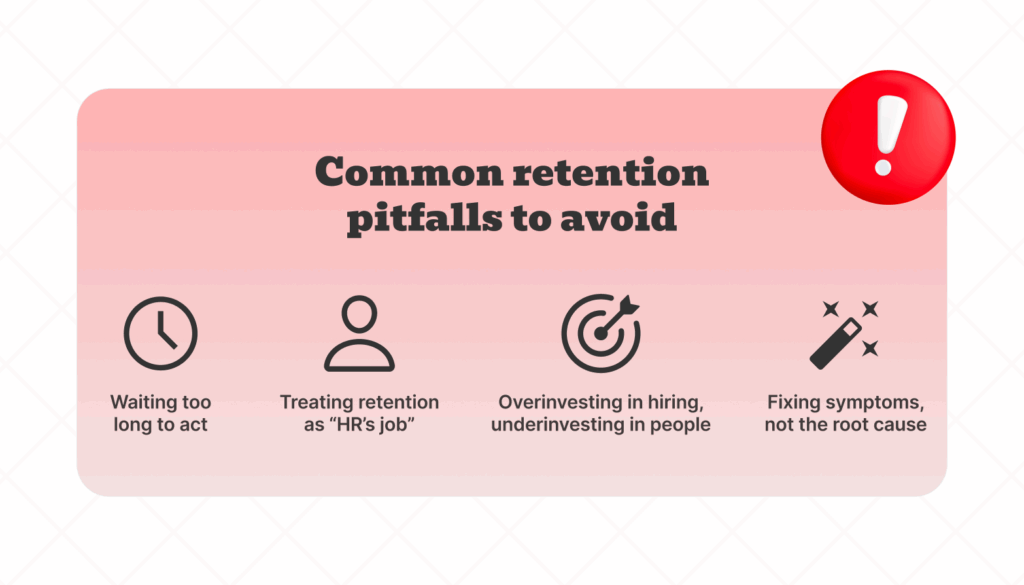
One of the biggest mistakes businesses can make is waiting until employees leave to understand what went wrong. Exit interviews are helpful, but by the time someone walks out the door, the opportunity to prevent turnover has already passed. Another frequent error is treating retention as solely an HR responsibility, rather than a company-wide priority that touches managers, team leads, and executives alike. Moreover, organisations often overinvest in hiring new talent while underinvesting in the people who are already driving results. Failing to nurture and appreciate your existing workforce is like patching a leaking roof while ignoring the foundation, it may hold temporarily, but eventually the costs will catch up.
FAQ: People Also Ask
Is employee turnover cost an issue for my business?
No; employee turnover cost is not inherently bad but unplanned and frequent turnover can be.
What’s the fastest way to reduce turnover costs?
One of the best ways to reduce turnover costs is to improve recognition and connection before compensation becomes an issue.
Stop Losing Talent Before It Costs You: Why Retention Pays
Calculating the real cost of employee turnover in 2026 is less about formulas and more about awareness. Once leaders understand the emotional, cultural, and financial layers involved, retention becomes a strategic priority rather than a reactive response.
Giftsenda supports this mindset by helping teams scale appreciation, automate meaningful moments, and maintain human connection across locations; without adding operational complexity. With tools like automated recognition for milestones, personalized gift invites and giveaway links, businesses can maintain consistent, meaningful connections across both remote and in-office employees. Features such as engagement tracking and reporting ensure that recognition is thoughtful, measurable, and friction-free. Because in the end, the most cost-effective strategy isn’t replacing people well but rather giving them reasons to stay.