Learn how to tackle remote team disconnection and boost virtual team engagement with activities, recognition, and thoughtful gifting.
Key Takeaways:
- Remote employees can feel unseen, disengaged, or disconnected, which affects motivation, collaboration, and overall team cohesion.
- Non-Zoom activities, gamification, regular manager check-ins, and thoughtful gestures help build trust, belonging, and sustained virtual team engagement.
- Physical gifts, personalized rewards, and digital tools not only celebrate achievements but also strengthen emotional bonds and keep remote teams connected and valued.
Feelings are powerful things. They shape how we show up at work, how we communicate, and whether we feel motivated or merely “logged in.” In a traditional office, emotions are often picked up through casual conversations, body language, and shared moments. In remote teams, those emotional signals are easier to miss (but no less important!). When people start feeling isolated or out of sync, productivity and morale quietly suffer. That’s why understanding the emotional side of virtual team engagement is the first step to answering a critical question: Why does my remote team feel disconnected, and more importantly, how can I fix it?
What Are The Psychological Signs Of “Virtual Isolation” In Remote Workers?
Virtual isolation is a psychological state in which remote employees feel socially disconnected from their colleagues despite being digitally connected through work tools and platforms. It occurs when interactions lack emotional depth, spontaneity, or a sense of belonging.
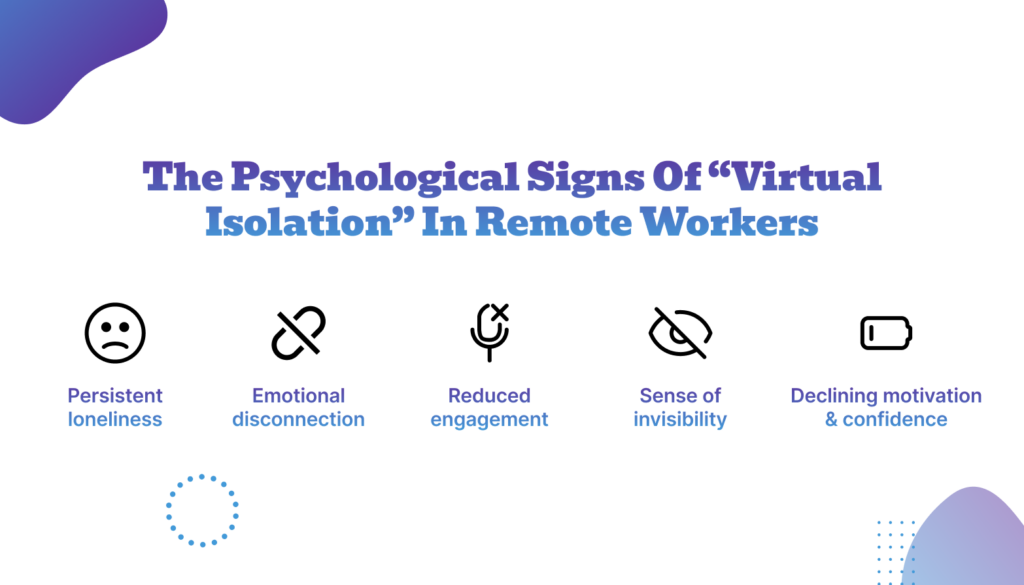
The psychological signs of virtual isolation often appear subtly. Remote workers may experience persistent loneliness, even when attending frequent meetings. A decline in motivation, reduced engagement, or emotional detachment from team goals may also be common. Team members can become less likely to speak up, share ideas, or ask for support, driven by a growing sense of invisibility.
Over time, workers may struggle with self-doubt, feeling disconnected from company culture or unsure of their value to the organization. If remote team disconnection is left unaddressed, it can contribute to burnout and long-term disengagement, thus making this issue a critical psychological risk in such environments.
How Does A Lack Of Physical Touchpoints Affect Team Cohesion?
A lack of physical touchpoints refers to the absence of in-person interactions, such as shared workspaces, informal conversations, and face-to-face collaboration, that naturally support relationship-building within teams. These moments, absent in remote environments, are often replaced by scheduled, task-focused communication. A recent survey revealed that remote employees often feel disconnected – 65% report weaker ties with coworkers, and 61% say team loyalty drops without face-to-face interaction. This shows just how much missing physical touchpoints can erode cohesion and engagement over time.
It might seem insignificant at first, but missing physical touchpoints can slowly erode virtual team engagement and cohesion. Trust may develop slower because employees have fewer opportunities to read social cues, body language, and tone in real time. Collaboration may feel more transactional, with less spontaneous idea-sharing or problem-solving. And teams can also struggle to form a shared identity, as rituals, routines, and cultural norms are harder to reinforce virtually. As these social bonds weaken, individuals may, as a result, feel less accountable to one another, thereby reducing engagement, collaboration quality, and the sense of “teamness” that drives high-performing teams.
What Are The Best Non-Zoom Activities To Reconnect A Distributed Team?
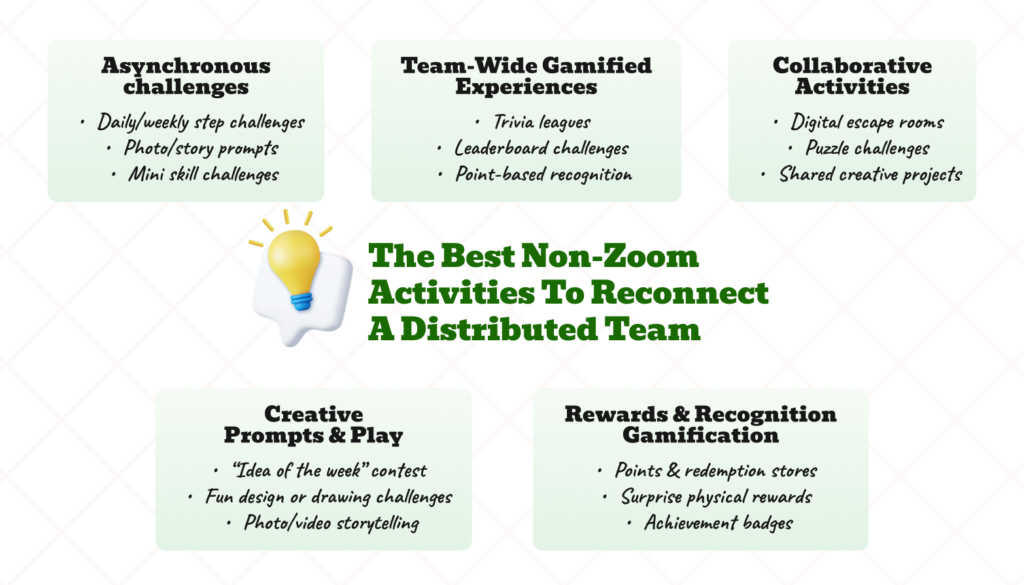
The best non-Zoom activities for reconnecting a distributed team are those that create shared experiences without relying on yet another video call. Asynchronous challenges, team-wide gamified experiences, and collaborative activities, such as step challenges, trivia leagues, digital escape rooms, or creative prompts, encourage participation on employees’ own schedules while still fostering a sense of belonging. Gamification works particularly well because it taps into motivation, friendly competition, and achievement, helping teams feel connected through progress rather than presence. These activities become even more impactful when paired with thoughtful physical touchpoints, such as surprise rewards or small tokens of appreciation delivered to team members’ homes.
Tip: Set up personalized, branded company stores for gamification rewards, so team members can redeem points for gifts or experiences; making recognition fun while simplifying corporate gifting for remote teams!
How Often Should Managers Interact With Remote Employees To Prevent Disconnection?
To prevent disconnection and remote team isolation, managers need to interact with employees consistently and thoughtfully. Weekly one-on-ones, casual check-ins, and regular team touchpoints are great ways to stay connected, provide feedback, and show recognition. These meaningful interactions, in essence, build trust and ensure remote team members feel supported and motivated.
Can Physical Gifts Bridge The Emotional Gap For Remote Teams?
For remote workers, the daily grind can feel isolating, with screens replacing casual chats and milestones going unnoticed. Physical gifts break through that emotional distance, sparking delight, surprise, and a sense of being truly seen. Unwrapping a thoughtfully chosen item can lift spirits and remind employees they belong. But beyond recognition, gifts also tap into human emotions – joy, appreciation, and belonging; helping distributed teams feel valued and remembered. When paired with personal messages or team-wide celebrations, these gestures turn fleeting moments into lasting emotional bonds, keeping morale and virtual team engagement high, and teams connected across any distance.
FAQs
How can I tell if my remote team is feeling disconnected?
Signs of disconnection can be subtle. Look for decreased participation in meetings, reduced idea-sharing, lower engagement with projects, or team members expressing loneliness or frustration. Emotional detachment, self-doubt, or burnout are also indicators that social bonds and team cohesion may be weakening.
Are non-Zoom team-building activities really effective?
Yes. Activities like gamified challenges, trivia, or collaborative creative prompts foster interaction, virtual team engagement, and a sense of belonging without relying solely on video calls. Incorporating recognition or rewards can further strengthen connections and make participation more meaningful.
How Giftsenda Keeps Remote Teams Connected
Keeping remote teams connected is easier if a company is armed with the right tools. That said, Giftsenda makes it seamless to turn recognition into meaningful experiences. With features like personalized gift options, branded company stores, digital gift invites, and point-based gamification, managers can celebrate milestones, reward achievements, and engage employees at scale. The platform offers concierge support as well as the ability to track delivery and acceptance, ensuring every gesture lands as intended. By combining thoughtful gifts with powerful platform tools, Giftsenda strengthens emotional bonds, boosts virtual team engagement, and creates a sense of belonging, helping distributed teams feel valued and connected no matter where they are.